
Blue-green algae is the common name for a group of noxious cyanobacteria often found in lakes and ponds here in North Texas. Early growth is often recognized as a “pea soup” appearance to the water surface. As its lifecycle progresses, the bloom intensifies and can turn shades of yellow, white, and eventually aquamarine blue. Dense mats of blue-green algae tend to accumulate on the downwind side of infested ponds and begin to emit pungent odors that resemble raw sewage or natural gas.
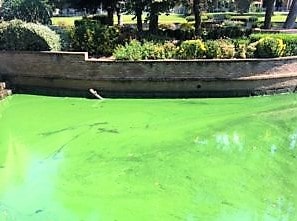
Blue-Green Algae Can Be Harmful
Blue-green algae found in freshwater can be directly toxic to fish and wildlife. The blooms produce a toxin that can harm mammals when ingested. Therefore, it is recommended that people and pets keep away from ponds with severe outbreaks of blue-green algae. Blue-green algae can also kill fish indirectly by causing oxygen levels to drop below the threshold for fish survival. This is caused by exaggerated fluctuations in daily oxygen levels or by a sudden die off or “crash” of the bloom. Sudden crashes can be the result of natural environmental conditions or improper chemical treatments.
Blue-green algae blooms can happen at any time; however, they are most common from mid-summer to fall in this area. The bloom is fueled by phosphorus and nitrogen. Both of these nutrients are common to urban watersheds due to extensive landscaping and fertilization programs. Blue-green blooms often appear overnight and there is no foolproof way to predict when it will happen. However, blooms are very common during the summer after a heavy rain event followed by a few days of direct sunlight. The best way to minimize these noxious blooms is to reduce nutrients within the watershed and extend the run times of fountains and aerators.
It should be noted that there are non-harmful surface films that are often mistaken for noxious cyanobacteria. These include single-cell algae, phytoplankton blooms, and vegetative pollen.
Be Careful When Treating Blue-Green Algae
Treating blue-green algae with algaecides is extremely risky and should only be done by a qualified biologist. The blooms are highly susceptible to algaecides and over-treatment can lead to large-scale toxin release or oxygen depletion. In fact, we do not recommend any form of chemical treatments during extended periods of very hot weather. The only exception to this rule is when the bloom is isolated to a relatively small area of a lake or pond.
Safer control methods include enhanced aeration and the application of beneficial microbes and nutrient mitigating products. These attack the cause of the problem rather than the symptom. When used in conjunction, they have been proven effective at reducing the density and duration of blue-green algae blooms.
The Community Should Do Their Part
There are several measures that residents can take to minimize the risk of cyanobacteria blooms. Following the recommendations below will improve the water quality and aesthetics of ponds within your community:
- Avoid the overuse of landscape fertilizer. Restrict applications within 25 feet of the pond edge and on any slopes that drain to the pond.
- Bag all grass clipping within the immediate watershed.
- Do NOT mow or weed eat all the way to the pond edge. Preserve a vegetative buffer around the pond to filter excess nutrients.
- Preserve some native aquatic vegetation in the pond. Chemical eradication of all vegetation makes ponds more prone to noxious cyanobacteria blooms.
- Discourage the feeding of waterfowl or other wildlife in the community.