
The Effect of Heavy Rain on Urban Retention Ponds
Rainfall is often feast or famine here in north Texas. In recent years, we have had several spring seasons with above average rainfall. The effect

Rainfall is often feast or famine here in north Texas. In recent years, we have had several spring seasons with above average rainfall. The effect

Due to urban sprawl and ongoing land development, surface water management is more important than ever. The pond management industry is ever evolving to keep

How deep is your pond or lake? Dropping anchor in a few places may give you a general idea, but with sediment buildup over the

As Old Man Winter approaches, many communities worry about freezing temperatures causing damage to their aeration or fountains. As a result, we field several calls
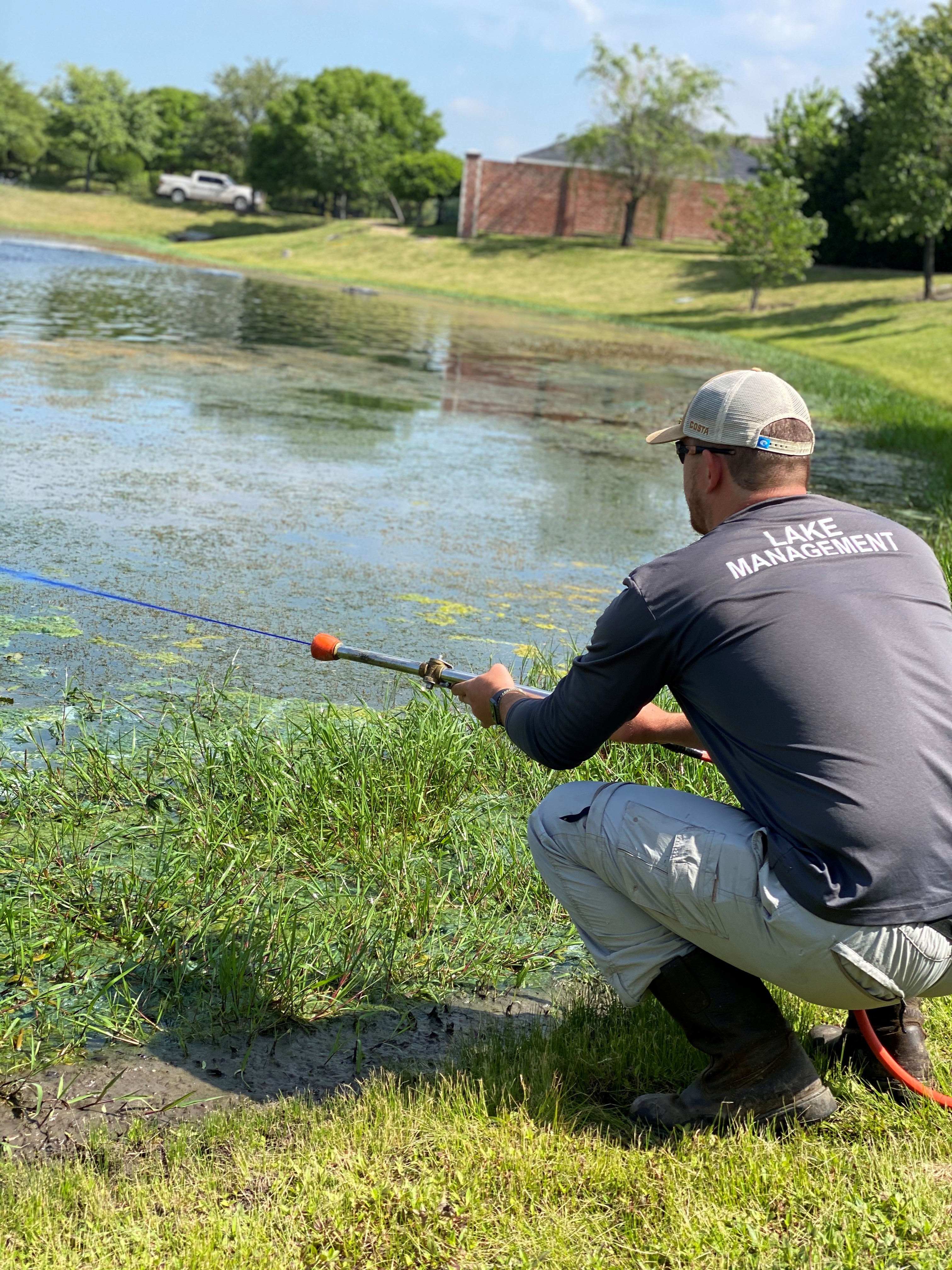
EPA registered algaecides are proven to work properly when used according to the label. However, these products are only intended to “kill” the algae. It

The summer season is the most trying time when it comes to managing the health and beauty of community ponds. During periods of hot and

Many variables come into play when assessing an aquatic weed/algae problem and choosing the best management method. When choosing aquatic herbicides/algaecides, the first step is
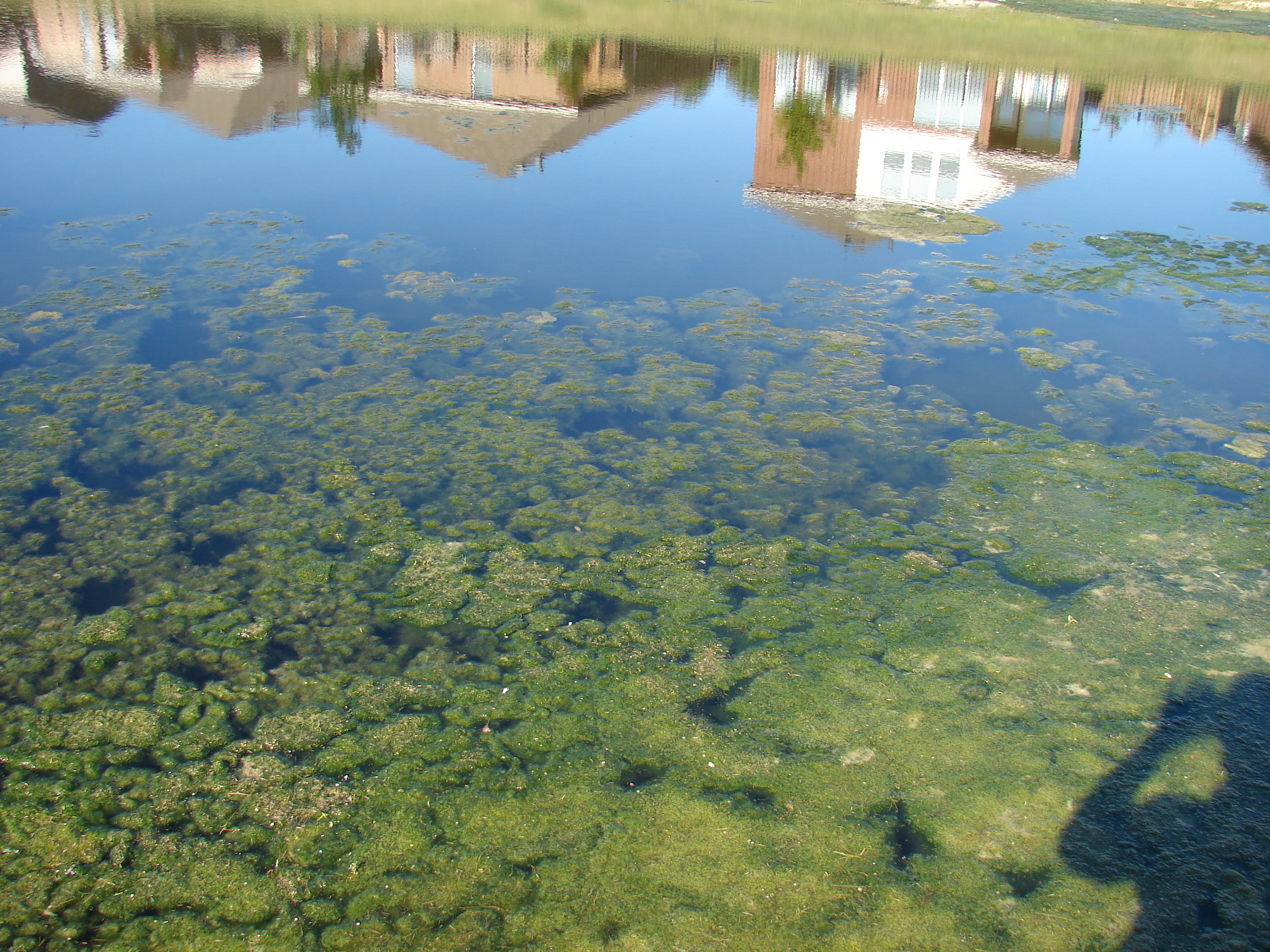
Nutrient loading from lawn fertilizer runoff is a major factor in promoting algae growth in urban ponds. It is ironic that the commercial products that

Lyngbya is a problematic aquatic growth common to many ponds in North Texas. It is not an aquatic plant nor a true algae, but rather

Potamogeton is a group of aquatic plants that are found all over the world. Generally referred to as “pondweeds”, these plants thrive in all types