
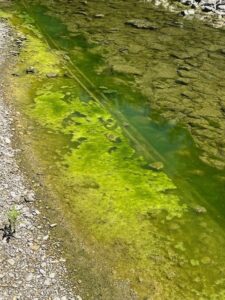
Bright green, thriving algae
EPA registered algaecides are proven to work properly when used according to the label. However, these products are only intended to “kill” the algae. It is a common misconception that these products are a magic wand that makes algae disappear overnight. That could not be further from the truth. Once the products have run their course in killing the algae, it is then up to Mother Nature to finish the job.
Thriving algae typically appears in various shades of green due to the chlorophyll in their cells. In most cases, recently treated algae will begin to change color within 12 hours after treatment. What was once green will now be turning various shades of white, gray, or brown. This color change signifies damage to the algal cells. The algae should die completely within 2-3 days after treatment.
Once the algae is dead, the discolored mats will remain on the surface due to trapped gases until natural decomposition kicks in. In an aqueous environment, the speed of decomposition is determined by several factors. Optimally, the treated pond should have sufficient depth, water movement, and supplemental aeration (fountain/bottom aeration). In this case, the complete decomposition of dead algae typically takes 7-10 days. However, there are cases when unsightly mats may remain on the surface for weeks or even months at a time.
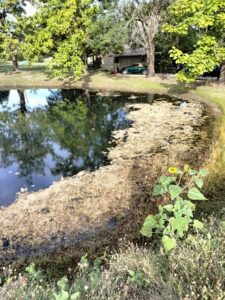
Dead algae post-treatment
Storm-water ponds provide an optimum environment for algae production. They are generally shallow, full of organic sediments, and saturated with nutrients. A major concern is that these ponds tend to lose water rapidly once we enter the scorching North Texas summer. This creates extensive areas of shallow water where algae not only thrive but also become resistant to post-treatment decomposition. One of the key factors in the speed of decomposition is water depth. In water less than a few feet deep, dead algae mats will remain visible for extended periods of time. This is because there is not adequate depth to allow the decomposing material to sink to the bottom. There are also more problematic species such as Pithophora and Lyngbya that are highly resistant to decomposition in general due to their complex cellular makeup.
The key word for summer algae treatments is patience. Re-treating algae that is already dead is both a violation of the label and a waste of funds. Physically removing the dead material is extremely costly and labor intensive. It also causes rapid regrowth caused by fragmentation. In most cases, if you have dead algae mats on the surface for extended periods of time, then there are bigger issues with the pond that need to be addressed. These can include dredge renovation, water level regulation, aeration enhancement, and nutrient management.