
Controlling Nutrient Pollution with Phosphorus Binding Agents
Phosphorus binders are relatively new tools available to certified pond and lake managers here in north Texas. They are used to help control nutrient pollution, the biggest problem facing lake managers today. Urban storm-water runoff carries large amounts of phosphorus and nitrogen into the nearest body of water. These nutrients fuel the out-of-control growth of algae and noxious aquatic weeds. In fact, phosphorus levels as low as 0.025 ppm are enough to stimulate harmful algae blooms (HAB’s). It is not unusual for community ponds to have phosphorus levels several times greater than what it is considered “polluted” according to surface water quality standards. Due to constant development and increased landscaping practices, the problems created by nutrient pollution show no sign of improving naturally. See our article on nutrients and their effect on algae and weed growth.
Ideal for Problematic Storm Water Ponds
Aluminum sulfate (alum) has historically been used in the wastewater industry to bind up reactive phosphorus. However, alum has a negative impact on pH and can kill aquatic life when used improperly. Several products are now available that effectively bind phosphorus without the negative ecological impacts. These products have two modes of action. They strip nutrients from the water column and also trap them in the bottom sediment. This results in a permanent bond of reactive phosphorus, making it unavailable to algae. Magnolia Fisheries has used binding agents to successfully mitigate nutrients in several problematic storm-water ponds. In most of those cases, reactive phosphorus dropped to near undetectable levels within 1 week after application. 
Use Nutrient Binders Together with Other Treatments
Binding agents are for ponds that have a history of problematic algae species that do not respond well to traditional algaecide applications. These can include blue-green algae, Lyngbya, and Pithophora. Since these products addresses the cause of the problem rather than the symptoms, it is recommended to apply the product soon after treating with algaecides. The end result should be a reduction in noxious algae growth, improved water clarity, and fewer foul odors associated with highly eutrophic (nutrient rich) ponds. It should be noted that storm-water ponds will require periodic applications throughout the year to offset additional nutrient inflow. However, completely closed systems may benefit from a single application in the winter or spring.
In addition to commercial phosphorus binders, the following are universally recommended to help mitigate nutrient pollution in community ponds:
• Reduce landscape fertilizer use in areas around the pond.
• Preserve native shoreline plants to act as a vegetative buffer.
• Do not mow all the way down to the pond’s edge.
• Always bag grass clippings and leaves.
• Limit the number of resident waterfowl by discouraging public feeding.
• Do not overfeed the fish.
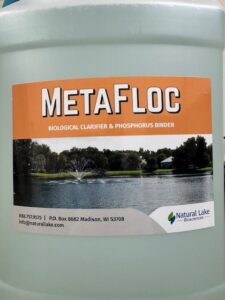
Call the biologists at Magnolia Fisheries today. We will perform a full water quality analysis and develop a nutrient mitigation prescription tailored specifically to your pond.
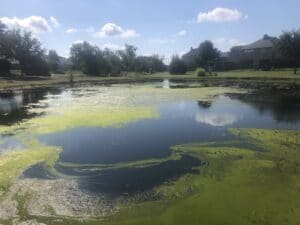
Before Treatment
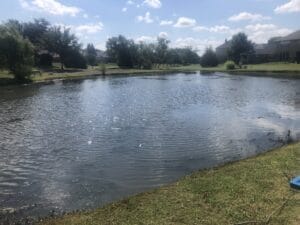
After Algaecide + Phoslock Prescription